
When a French drain is the right solution
French drains solve water problems that start outside the home. If water pools near the foundation, seeps through the base of the wall, or saturates the soil after snowmelt, a buried drain is often the most reliable long-term fix.
- Water pooling near the foundation after rain or snowmelt
- Seepage at the wall-floor joint in the basement
- Soggy or eroding yard areas
- Crawl space moisture from groundwater
- Downspouts and surface water near the home
- Hydrostatic pressure against foundation walls
How we install a French drain
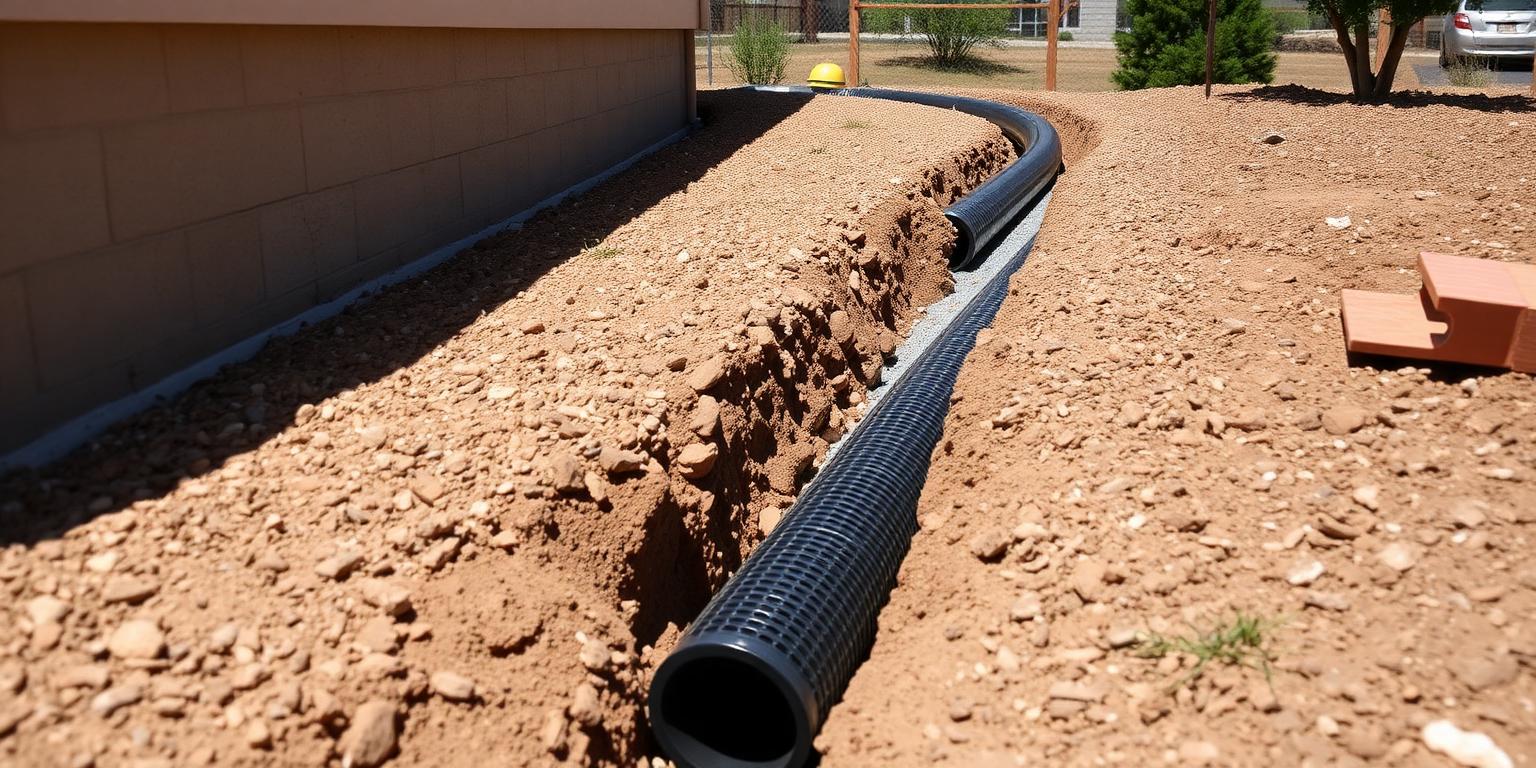
We excavate a sloped trench along the problem area, line it with landscape fabric, and fill it with clean stone that surrounds a perforated pipe. Water enters the pipe and is discharged downhill, to a sump basin, or into a dry well, depending on the site.
- Trenching to the correct depth and slope
- Filter fabric and clean stone bed
- Perforated collection pipe sized for the water volume
- Proper discharge away from the structure
- Site restoration and regrading
Interior vs exterior French drains
Exterior French drains stop water before it reaches the foundation. Interior perimeter drains, sometimes called interior French drains, capture water that already enters the basement and route it to a sump pump. We inspect first and recommend the location that fits the water source.
Built for mountain snowmelt
Steep lots in Glenwood Springs, Carbondale, and Aspen shed large volumes of snowmelt quickly. Our drains are sized for peak flow, not average rainfall, so they keep working when the spring thaw is heaviest.