
Licensed & Insured — Colorado
20+ YrsReviews
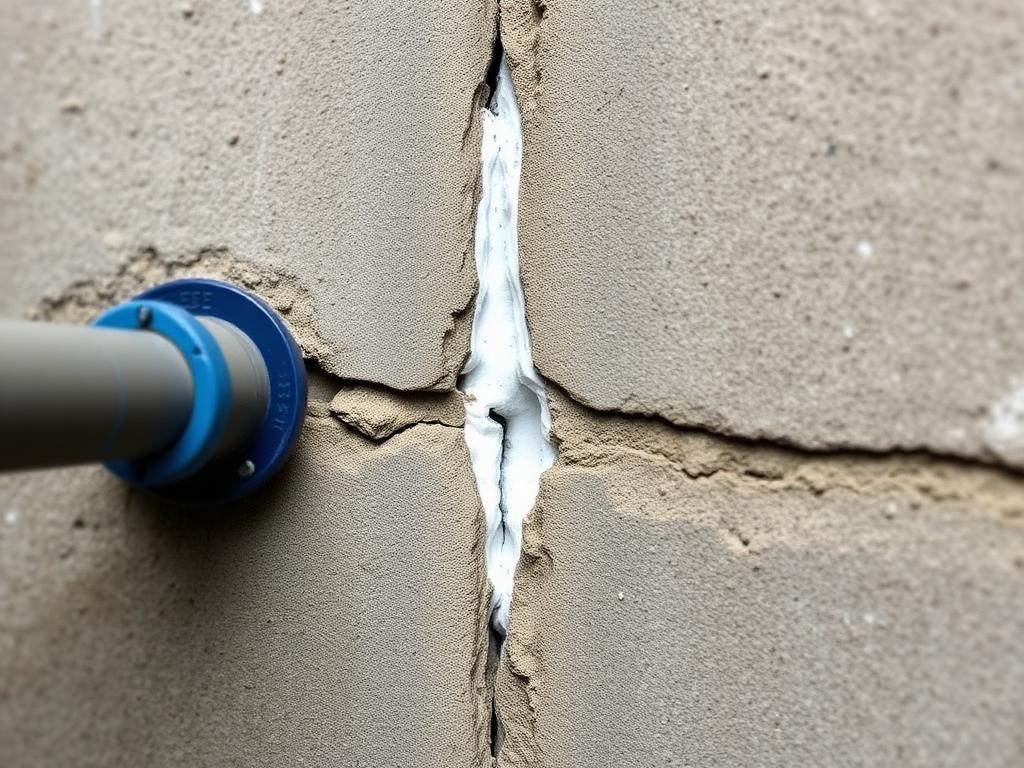
Epoxy injection port sealing a foundation wall crack

Waterproofing

Basement & Foundation Crack Repair

We seal leaking foundation cracks with injection repair: polyurethane for active water leaks, epoxy where structural bonding is needed. The repair fills the crack through the full thickness of the wall so water and soil gas stop coming through.

When injection is the right fix

Injection works on poured concrete walls with non-structural or stabilized cracks. If the wall is still moving, we stabilize it first — sealing a crack in a wall that continues to shift only buys a season.

  • Vertical or diagonal cracks that leak during snowmelt
  • Damp streaks and efflorescence below a crack
  • Cracks in block walls letting water through joints
  • Cold joints and tie-rod holes seeping water

How the repair works

We clean the crack, set injection ports along its length, cap the surface, and inject resin under pressure until it travels the full depth of the wall. Polyurethane expands to chase water and stays flexible; epoxy cures rigid and restores bond strength.

Repairs are typically finished in a single visit and the wall can be repainted afterward.

Epoxy vs. polyurethane

  • Polyurethane: flexible, expands to chase active leaks
  • Epoxy: rigid, restores structural bond in poured walls
  • Polyurethane for cold joints and tie-rod holes
  • Epoxy where the crack must not move again
  • Both fill the full wall thickness, not just the face
  • Both can be painted or finished over

Why cracks leak here

Across Rifle, Glenwood Springs, Carbondale, Grand Junction, Aspen, Basalt and Vail, spring snowmelt saturates backfill fast and pushes water against basement walls under real hydrostatic pressure. A hairline crack that stays dry in July can run water in April.

Freeze-thaw cycling widens those cracks a little each year, so sealing early is far cheaper than waiting for the wall to start moving.

How we seal a leaking crack

  1. 01

    Diagnose the crack

    We confirm whether the crack is structural or non-structural and whether the wall is still moving before choosing a resin.

  2. 02

    Prep and port

    The crack is cleaned, injection ports are set along its length, and the surface is capped to hold pressure.

  3. 03

    Inject under pressure

    Resin is injected until it travels the full thickness of the wall, cutting off the water path completely.

  4. 04

    Finish and verify

    Ports are removed, the wall is finished, and we check drainage outside so the crack is not fed again.

Cracks, settling, or water in the basement? Don't wait.

1-970-235-0092 Call Now

Frequently Asked Questions

Will crack injection last?
On a stable wall, yes — the resin fills the full wall thickness and stays put. If the crack reopens, that is a signal the wall is still moving and needs structural repair.
Can I use a hardware-store patch instead?
Surface patches seal only the face of the crack. Water still enters the wall and works around the patch, which is why injection through the full thickness is the lasting repair.

Free Estimate

Get Your Free Foundation Estimate

Tell us what you're seeing and we'll schedule an on-site inspection with a written scope and fixed price. No cost, no obligation.

1-970-235-0092

732 Buckhorn Dr Unit B, Rifle, CO 81650 · Mon–Fri 8:00am – 5:00pm

Or call 1-970-235-0092 — no cost, no obligation.