
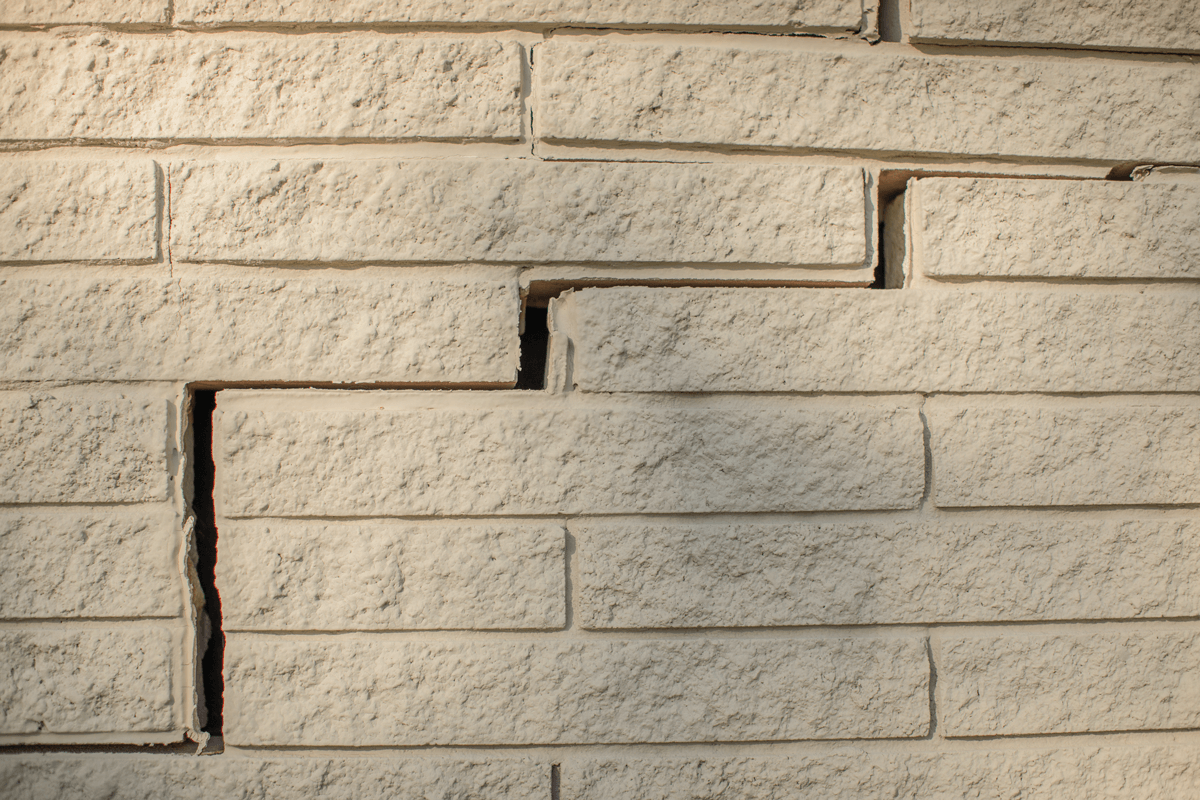
Foundation wall problems
Horizontal cracks, stair-step cracks in block, and walls that lean inward are signs of lateral soil pressure. Wet, expanding soil pushes against the wall until it bows or shears.
We stabilize walls with Supportworks wall anchors, carbon fiber reinforcement, or steel I-beam systems, and in many cases we can straighten the wall back toward its original position over time.
- Bowing and buckling walls
- Horizontal and stair-step wall cracks
- Collapsing retaining walls
- Shearing at the top of the wall
Settlement and sinking
When the soil beneath a footing loses bearing capacity, the foundation drops with it. You see diagonal cracks above windows and doors, gaps at the trim, and floors that slope toward one corner.
Push piers and helical piers drive past the unstable soil to competent bearing strata, transfer the load of the home to the pier, and often lift the structure back toward level.
- Diagonal cracks above door and window openings
- Gaps between walls and ceilings
- Sloping or bouncy floors
- Chimneys pulling away from the house
Floor and crawl space problems
Cracked slabs, sagging crawl space floors, and bouncy joists usually trace back to failed supports, moisture, or soil movement under the slab.
Adjustable crawl space support posts, slab piers, and polyurethane foam injection restore support without tearing out the floor.
Soil conditions behind the damage
Expansive clay soils in Mesa, Garfield, Pitkin, and Eagle counties absorb water in spring and dry out in summer, and that swelling and shrinking is the single biggest driver of foundation movement in the region.
Poor grading, downspouts that discharge next to the wall, and irrigation against the foundation all accelerate the cycle. Managing water is part of every repair plan we write.